Is boiled water the same as RO water in McKinney?
Both are called safer water, but they solve different problems, and knowing which is which matters most after a storm or a main break.
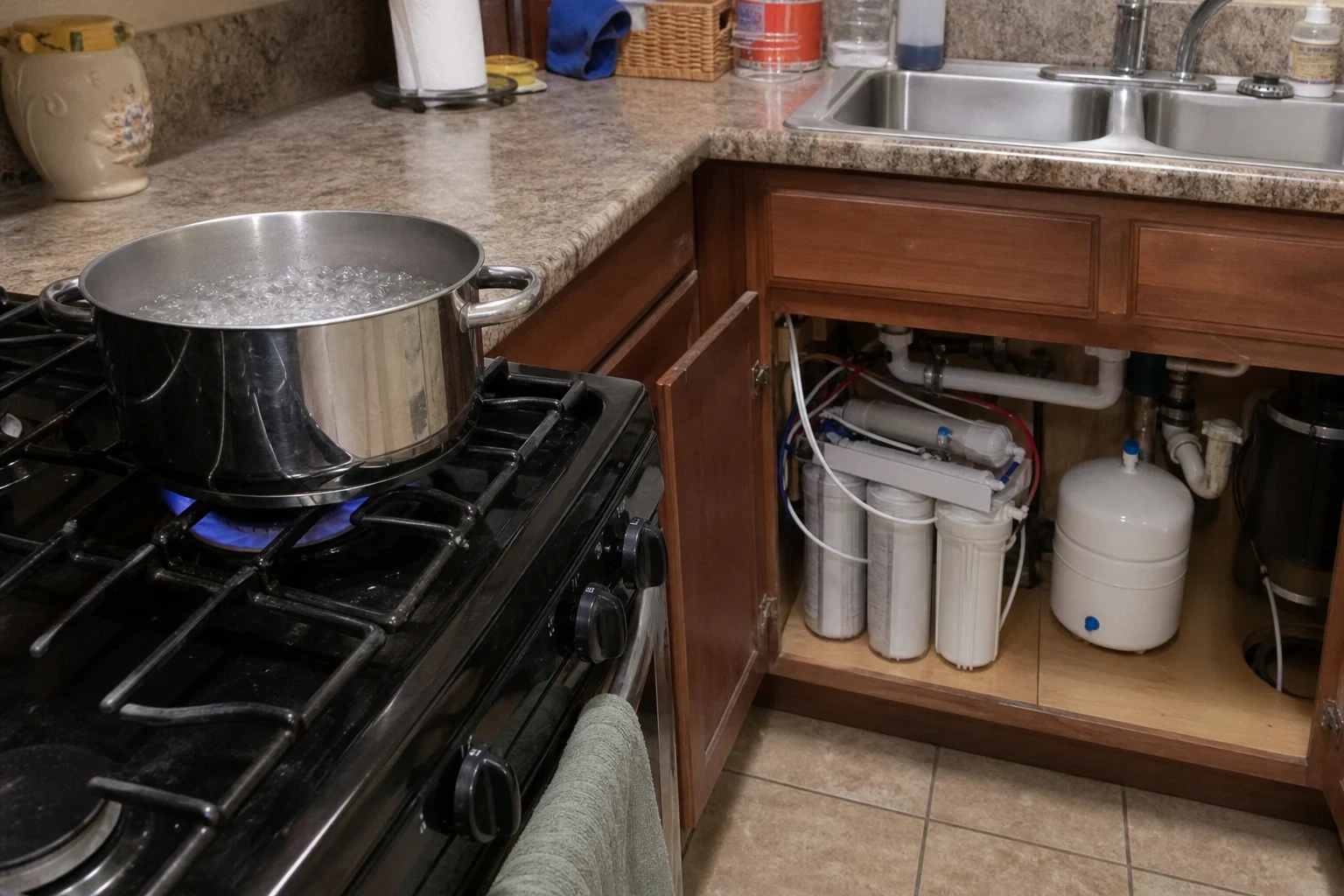
Is boiled water the same as RO water?
No. Boiling kills germs like bacteria and viruses, but it leaves dissolved minerals, metals and most chemicals in the pot. Reverse osmosis pushes water through a fine membrane that strips out most dissolved solids, lead and many contaminants. Boiling is a short-term safety step. RO is an everyday drinking water system. Questions? (972) 734-3141
What boiling actually does to your water
Boiling is about germs. Hold water at a rolling boil for a minute and you kill the bacteria, viruses and parasites that can make you sick. That is why the city tells you to boil when a line breaks or pressure drops.
Boiling does nothing for what is dissolved in the water. Minerals, lead from old fixtures, nitrates and most chemical traces stay put. Some of the water turns to steam, so whatever is left gets a little more concentrated, not less.
It can help with chlorine smell, since some chlorine leaves as the water heats. That is a side effect, not a fix you can count on.
- Kills: bacteria, viruses, parasites
- Does not remove: minerals, metals, nitrates, most chemicals
- May reduce: some chlorine taste and odor
- Leaves behind: scale in your kettle, a slightly stronger mineral load
What a reverse osmosis system removes
A reverse osmosis system sits under your kitchen sink and feeds its own faucet. Water goes through a sediment filter, then a carbon filter, then a very tight membrane, and usually one more carbon filter before it reaches your glass.
The membrane is the part boiling cannot match. It holds back most dissolved solids, including lead, fluoride, nitrates, salts and many trace chemicals. The carbon stages handle chlorine taste and odor. What you get is clean, plain-tasting water for drinking, coffee, ice and cooking.
RO is built for treated city water. It is not sold as a stand-in for disinfection, and that matters in the next section.
- Removes most dissolved solids, lead and nitrates
- Carbon stages take out chlorine taste and smell
- Gives you a dedicated drinking water tap
- Needs filter and membrane changes on a schedule
Should you still boil water during a boil notice if you have RO?
Yes. Follow the city notice, even with an RO system. Winter freezes and summer storms in North Texas can break mains and drop pressure, and that is when boil notices go out. Your RO membrane is very fine, but most home units are not rated to replace boiling when the supply may carry germs.
After the notice lifts, take care of the system before you drink from it again. Run the RO faucet and let the storage tank empty and refill a couple of times. If the notice lasted a while, it is smart to change the pre-filters, since they may have caught what came through the lines. We can walk you through this by phone or come out and do it.
If you want a backup for germs at the tap, a UV water treatment unit uses ultraviolet light to treat water as it passes through. It is not a reason to ignore a city notice, but it adds a layer for families who want one.
- During the notice: boil water for drinking, cooking, ice and brushing teeth
- After the notice: flush the RO tank and faucet
- If the notice was long: replace the pre-filters
- Dump any ice made during the notice
Which one makes sense for your home
Boiling costs nothing extra and is the right move in a short-term germ scare. It is a poor everyday habit, though. It takes time, it heats the kitchen in a Texas summer and it does not touch lead, nitrates or that chlorine aftertaste.
RO makes sense when you want better drinking water every day without hauling jugs. It is a strong pick if your home has older plumbing, if someone in the house is sensitive to taste, or if you just want one tap you do not have to think about. If your concern is the whole house, like chlorine in the shower or hard-water spots, whole-home filtration or a water softener may be the better place to start.
A water test is the honest first step. We look at what is actually in your water before we suggest anything, so you are not sold a system you do not need.
More questions about boiled and RO water
- Is distilled water the same as RO water?
- They are close but made differently. Distilling boils water and collects the steam, which leaves most solids behind. RO uses a membrane instead of heat and does the job faster and cheaper at home.
- Does RO water taste flat?
- Some people notice it tastes plain because the minerals are gone. Many systems can add a remineralizing stage after the membrane if you prefer a little more taste.
- Can I boil RO water for tea or baby formula?
- Yes. Boiling RO water is fine and you will see far less scale in your kettle. For baby formula, follow your pediatrician's advice on water.
- Do I have to turn off my RO system during a boil notice?
- You do not have to shut it off, but do not rely on it for drinking until the notice ends. Then flush the tank and faucet, and change the pre-filters if the notice ran long.
Find out what is in your water before you choose
One phone call sets up a water test at your home. We go over the results with you in plain words and give you a quote only if a system like reverse osmosis actually fits.