ServicesWater Softeners
Water Softeners in McKinney, Sized From a Hardness Test
We check how hard your water is first, then tell you plainly whether a softener is worth the money. If it is, we size one to your home and the people living in it. If it isn't, you hear that from us too.
When a Softener Is the Right Fix
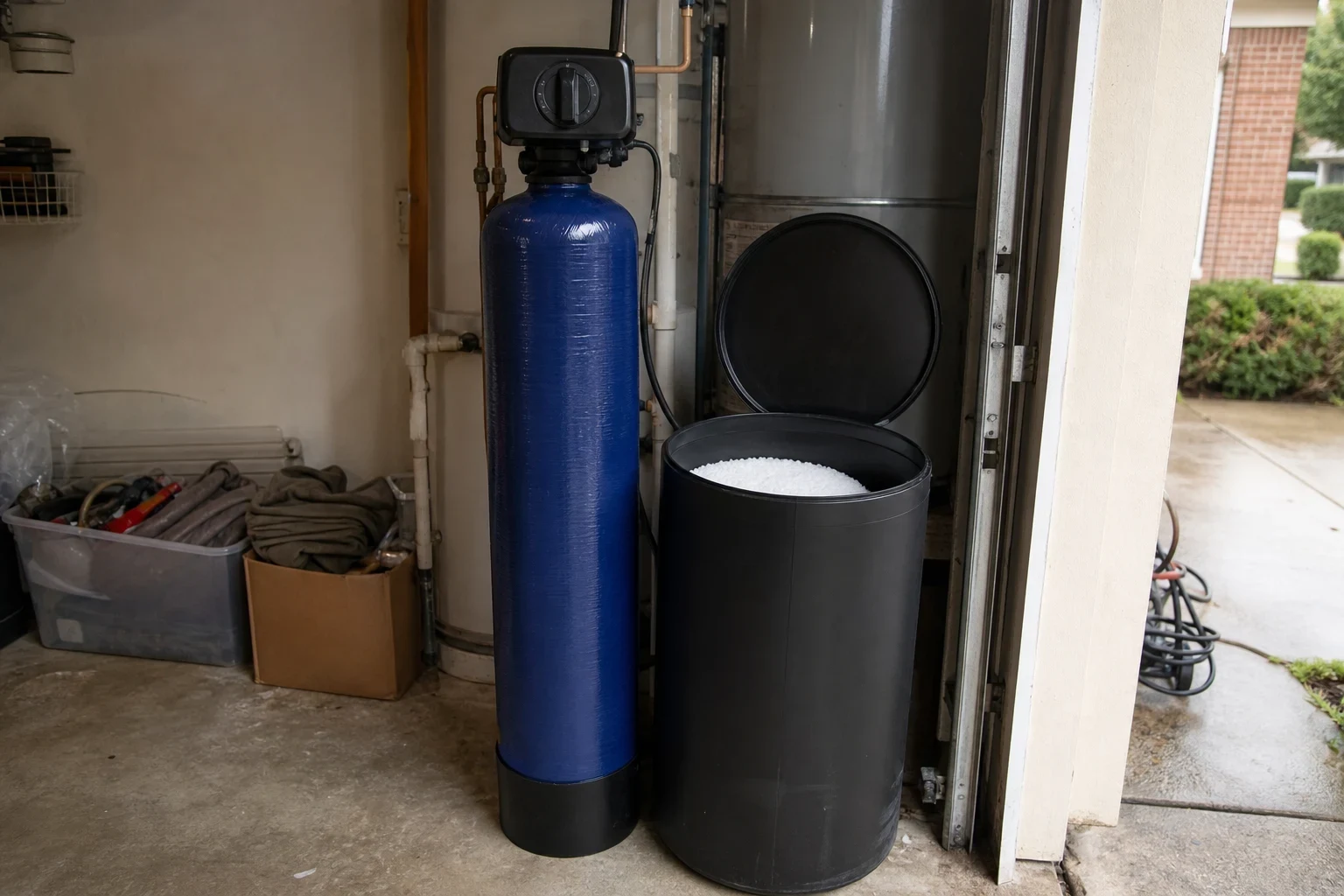
Calcium and magnesium are what make water hard. Heat pulls those minerals loose, and they harden into scale. On the outside it leaves chalky buildup on taps and cloudy marks on glasses. Inside your water heater, it stacks up where nobody looks. A softener trades those minerals out inside a tank of resin beads. On a set schedule, it flushes the beads with brine so they keep working.
It is not a filter. Chlorine taste and the other things people want out of drinking water pass right through it. For those, look at whole-home filtration or reverse osmosis. Some homes end up with a softener plus one of those. Your test results decide which, not a brochure.
Some calls come after a softener quits all at once, usually following a hard freeze or a long power outage. We find what broke and tell you if a part will do or if the unit is finished.
What Your Softener Install Includes
A hardness reading first
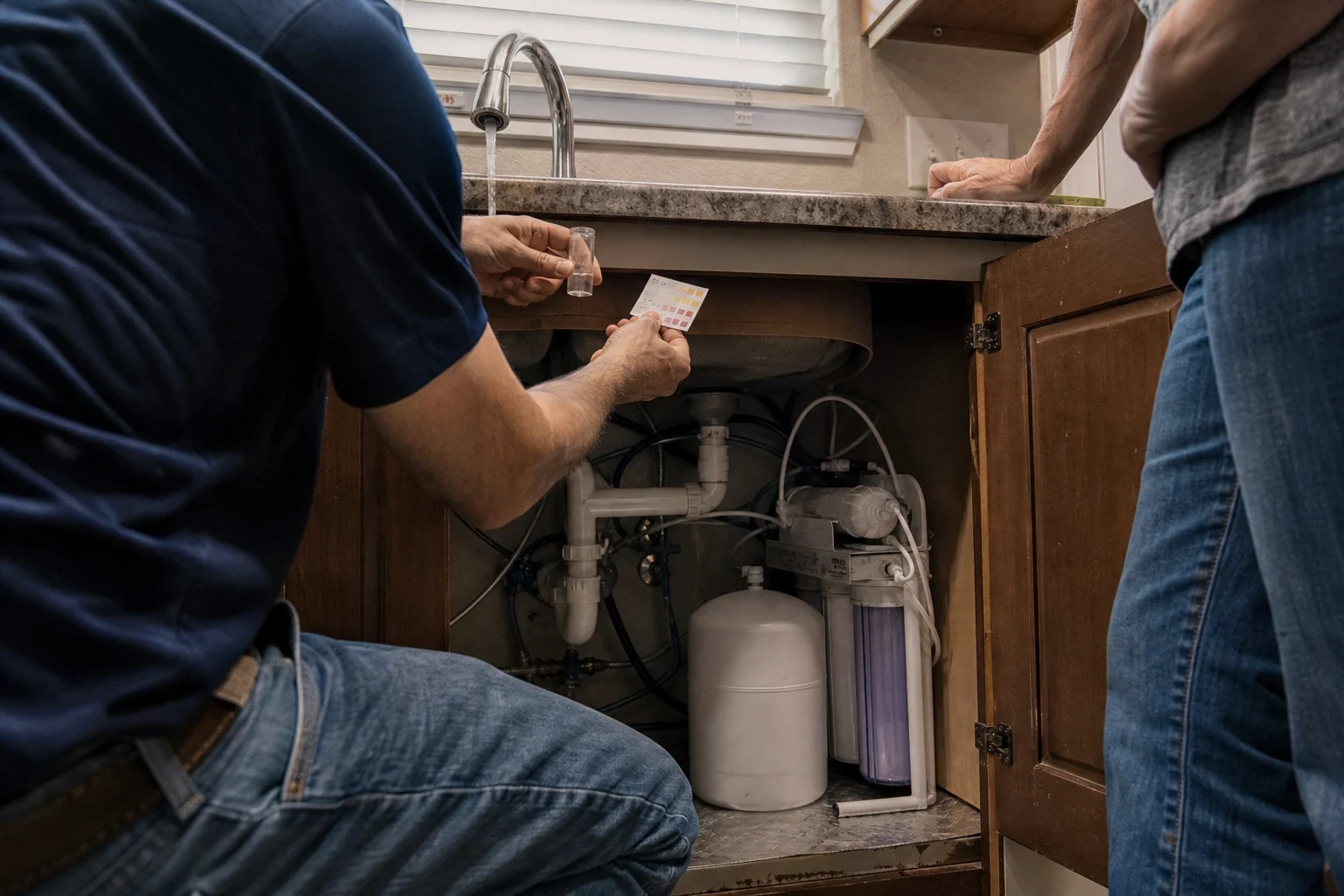
Before we talk equipment, we measure hardness at your tap. That reading decides the tank size and how often the unit recharges. You get a water report with the numbers written down.
Sizing to your household
Hardness is one input. We also ask how many people live with you and roughly how many gallons the house uses each day. Too small and you run out of soft water by dinner. Too big and it burns through salt and rinse water.
Plumber-installed tie-in
Installations are handled by subcontracted master-licensed plumbers. They connect the unit to the main supply and add a bypass. That lets you take the softener offline while the rest of the house keeps running water.
Drain line and brine tank placed right
The drain line ends at a proper air gap, so rinse water can never pull back into your supply. The brine tank goes where you can pour in a bag of salt without shifting boxes or bikes.
Settings and a walk-through
We program the control valve to your hardness reading. Then we show you the bypass handle, how to check the salt and how to reset the clock if the power drops.
Signs Your Home May Need a Softener
- White crust on faucets
- Chalky rings around aerators and shower heads are scale. With hard water they return within days of scrubbing.
- Spots on dishes and glass
- Cloudy glasses from the dishwasher and spotted shower doors usually come from minerals, not from your soap.
- A popping water heater
- Rumbling from the tank often means scale has collected on the bottom. The burner has to heat through that layer, which wears the heater out sooner.
- Shampoo that barely foams
- Minerals tie up soap before it can lather. You use extra detergent and shampoo, and your skin still feels coated after a shower.
- Your old softener stopped working
- If hard water came back after a freeze or an outage, look for a cracked bypass, a frozen brine line or a lost clock setting. We check those before anyone mentions a new unit.
How the Job Goes
- 1
Your call and water test
You call, we pick a time, and we test hardness at your home. While we're there, we find where the main line enters and where a unit would fit.
- 2
A straight answer
We go over your numbers with you. If your water isn't hard enough to justify a softener, we say so. If it is, you get your quote by phone or in person, with the unit and the labor listed separately.
- 3
Install day
The plumber shuts off your water, cuts in the bypass loop, sets the tanks and runs the drain line. Most installs wrap up in one visit, and we haul off the pipe scraps and boxes.
- 4
Startup and check
We fill the brine tank, run the first regeneration and test the water again so you can watch the hardness number fall. Then we cover salt and settings.
What Moves the Price
Standard professional installation is included for qualifying homes. Beyond that, the total comes down to which unit fits your water and how much work the tie-in takes. We go through each line of the quote before anything gets cut.
- Your hardness reading and headcount
- More minerals per gallon and more people using water call for a bigger resin tank or a valve that recharges more often. That sets the unit's base cost.
- Existing plumbing loop
- A lot of newer houses already have a softener loop stubbed out in the garage. Without one, the plumber cuts into the main line to build it, which takes more time and parts.
- Location and access
- An open garage right beside the main is quick work. A long run to the nearest drain or a cramped closet adds labor.
- Removing an old unit
- Disconnecting a dead softener and hauling it away adds to the job. If a freeze damaged the old fittings, valves may need replacing too.
- Permits
- When the job needs a permit, it gets pulled as part of the work, and the fee shows up as its own line in your quote.
Common Softener Questions
- Is a softener really necessary for my home?
- Many homes can skip one. It depends on your hardness reading and how much scale bothers you. We test, show you the result, and if the number does not call for a softener, we will not push one.
- Will softened water taste any different?
- Very little. Hardness minerals are removed, but chlorine and other taste issues remain. For taste, whole-home filtration handles every faucet, and reverse osmosis at the kitchen sink handles drinking and cooking water.
- Can I drink softened water?
- Most people can. A salt-based softener adds a small amount of sodium. If you are limiting sodium, a reverse osmosis system at the kitchen sink takes most of it out.
- A freeze knocked out my softener. Is it repairable?
- Often it is. Garage units bear the brunt of a hard freeze, and the bypass or brine line is what usually cracks. We inspect it and tell you if a part will fix it or the unit needs replacing.
- What upkeep does a softener need?
- Salt, mostly. Check the brine tank monthly and keep it around half full. After an outage, check the clock so it does not regenerate while someone is in the shower.
- What if there is a problem with the installation?
- Call and we will return to check it. Your install has a 1-year workmanship warranty on installation-related defects, so a leaky fitting or a drain line that comes loose because of our work gets repaired.
Find Out How Hard Your Water Really Is
We'll test your water at your home in McKinney or nearby towns like Allen and Prosper, then tell you whether a softener is worth it. Either answer is fine with us.