ServicesWhole-Home Filtration
Whole-Home Water Filtration in McKinney
We put one filter system on the main line where water enters your home. It strips out chlorine taste and smell and catches grit before it reaches your faucets, showers and water heater. We start by testing your water so the system fits what actually comes out of your tap.
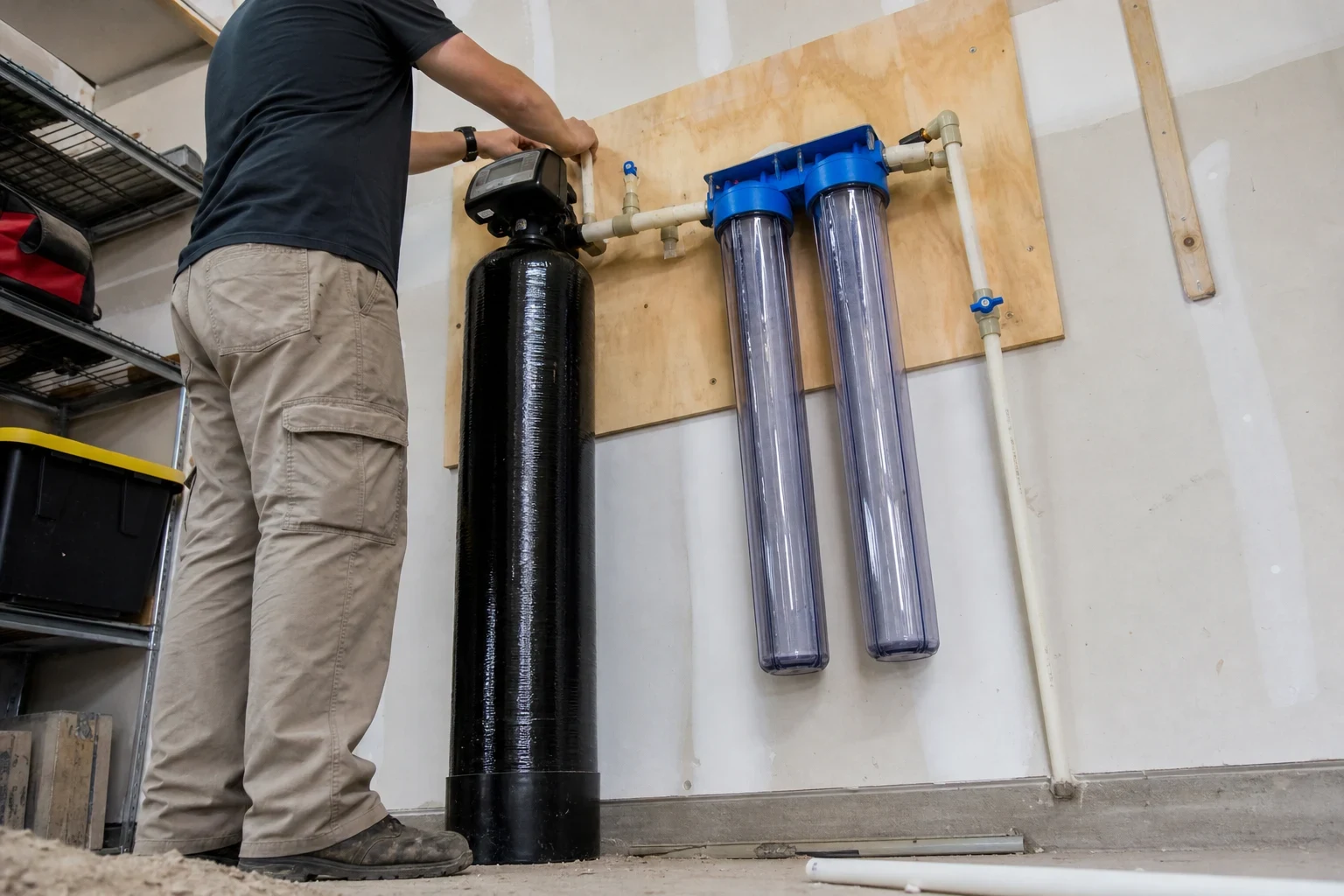
One System, Every Tap in the House
A whole-home filter sits at the point where the city line comes into your home, most often in the garage or near the water heater. Everything downstream gets filtered: kitchen, bathrooms, laundry, ice maker. It is the right call when your complaint is the whole house, like a pool smell in the shower or tea that tastes off, and not just the glass of water you drink.
Most systems pair a sediment prefilter with a large carbon tank. The prefilter grabs sand, rust flakes and grit. The carbon takes out the disinfectant the city adds, whether that is chlorine or chloramine, along with the taste and odor that come with it.
Storms matter here too. After heavy rain, a main break or line repairs, crews flush the pipes and loose sediment can come through your service line for a day or two. A prefilter stops that grit before it settles in your water heater or clogs aerators. It does not replace a boil notice, though. If the city issues one, follow it.
What Comes With the Install
Sediment prefilter
A cartridge stage that catches sand and scale ahead of the carbon. It protects the main tank and is the part you change most often.
Carbon filter tank
Sized to your household's flow so the water spends enough time in the media. We use catalytic carbon when your water calls for it, since plain carbon is weaker on chloramine.
Bypass valve
Lets you send water around the system during a filter change or a repair without shutting off the whole house.
Plumbing done on your main line
A plumber makes the cut-in, sets the fittings and shutoffs, and runs a pressure check before anyone packs up.
A walkthrough before we go
We show you the bypass, the shutoff and how to swap the prefilter. You will know what to watch for and when to call us.
When a Filter at the Main Is Worth It
- Your bathroom smells like chlorine
- Hot water releases chlorine into the air, which is why a shut bathroom smells strongest. Carbon on the main line removes it for the whole house.
- Ice and coffee have an odd taste
- When water from the fridge and the kettle both taste flat or chemical, the problem is coming in with the supply, not from one appliance.
- Sand or tint after storms and repairs
- Grit in faucet screens or brownish water after city main work means sediment is traveling through your pipes. A prefilter stops it before it collects in fixtures and the water heater.
- You buy water by the case
- Many households stock bottled water only because the tap tastes bad. A filter at the main usually ends that for good.
How a Whole-Home Job Goes
- 1
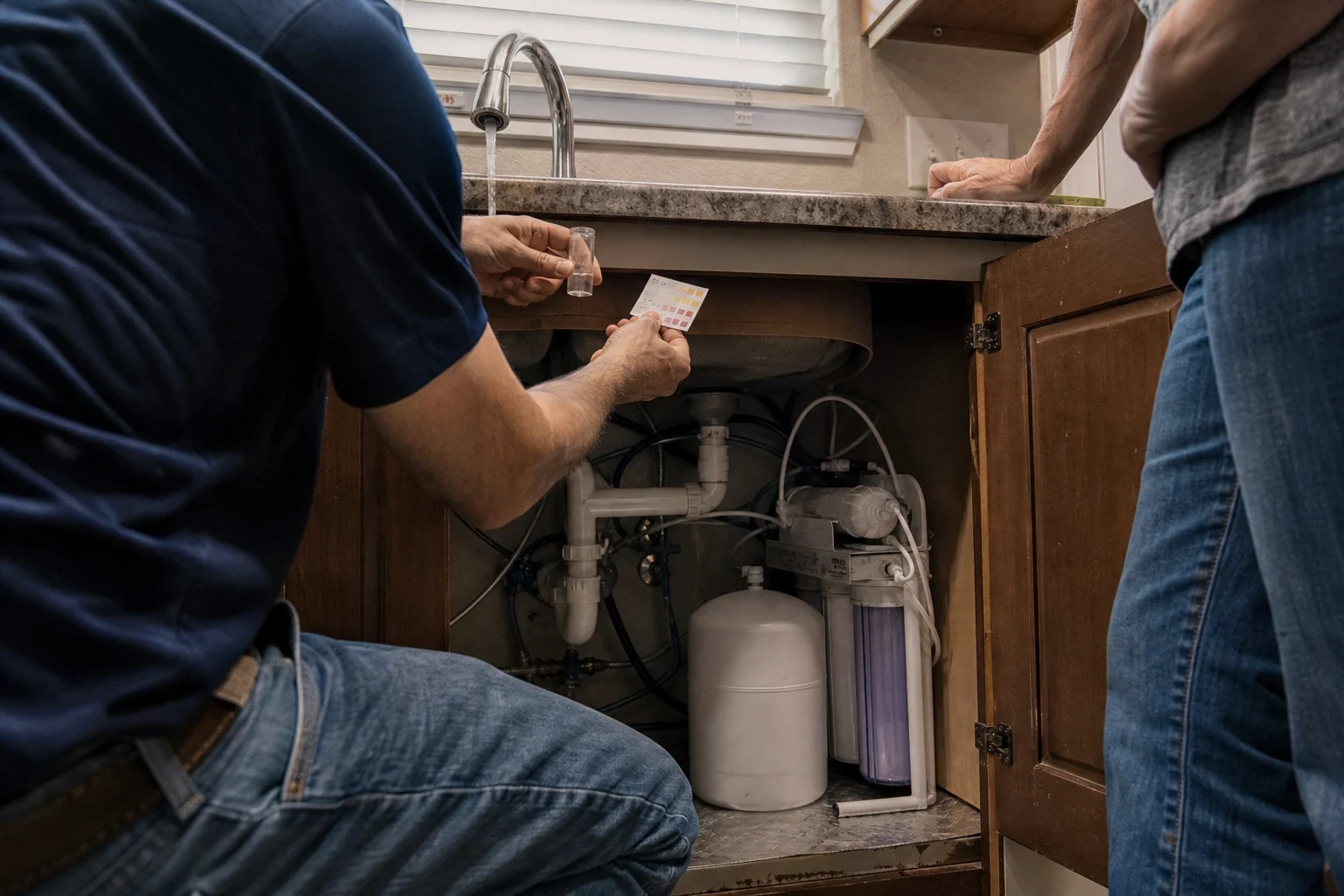
Start with a water test
You call, and we set a time to test your water at your home. You also get our water report, so you see the readings and not just our opinion.
- 2
A quote in plain terms
We tell you what size and type of system fits your readings and your plumbing. If a filter at the main is more than you need, we say so. Your quote comes by phone and in writing.
- 3
Install day
The plumber closes your main shutoff, cuts the system into the line and adds the bypass. Plan on the taps being off for part of the morning or afternoon. Most installs wrap up well before dinner.
- 4
Rinse, check and clean up
Once the system is in, we run water through the new media until it comes out clear. Then we look over every joint for drips, confirm your pressure, tidy the work area and show you how it all works.
What Goes Into Your Price
No two main lines are laid out the same, so we give you a number only once we have tested your water and found where the line enters. Qualifying homes get standard professional installation as part of the price. If yours needs work past that, you hear about it before the job is scheduled.
- Where your main line comes in
- A bare pipe with open space around it is a fast cut-in. When the line runs behind drywall, under the slab or a long way from a good mounting spot, the plumber spends more time building a loop to reach it.
- System size
- More people and more bathrooms mean more water moving at once, and a bigger tank is what keeps the pressure steady.
- The type of carbon
- Catalytic carbon, used for chloramine, costs more than standard carbon. Your test results tell us which your water needs.
- Extra pieces
- Some homes add a second sediment stage or a softener next to the filter. Every added piece raises the total.
Whole-Home Filter Questions We Get
- Does a filter on the main line lower my water pressure?
- Not if it is sized right. A tank that is too small can let pressure dip when two showers run at once. That is why we size the system to your home and check the pressure before we leave.
- Do I need reverse osmosis as well?
- That depends on what you want from the kitchen tap. The carbon on your main line takes care of taste and odor everywhere. For a finer stage just for drinking and cooking, an under-sink reverse osmosis unit adds that, and the two run side by side with no trouble.
- Does this fix hard water?
- No. Carbon does not take out the minerals that make water hard. If your test points to scale, a softener is a separate topic we can go over.
- Is filtered water safe to drink during a boil notice?
- No. A filter is not a substitute for a boil notice. Follow the city's directions until the notice is lifted, then run your taps, and we can check the prefilter if a lot of grit got through.
- Who hooks up the system, and is the work covered?
- Subcontracted master-licensed plumbers make the connection to your main line. The work comes with a 1-year workmanship warranty on installation-related defects, so a fitting we put in that leaks gets fixed.
- How often do the filters need changing?
- The sediment prefilter gets replaced on a routine schedule, sooner if your water carries more grit. The carbon tank lasts much longer. We base the schedule on your test readings and how many people live in the house.
Find Out What Your Water Needs
We test first, then tell you if a whole-home system is worth it for your home. Give us a call and we will set up a time that works for you.